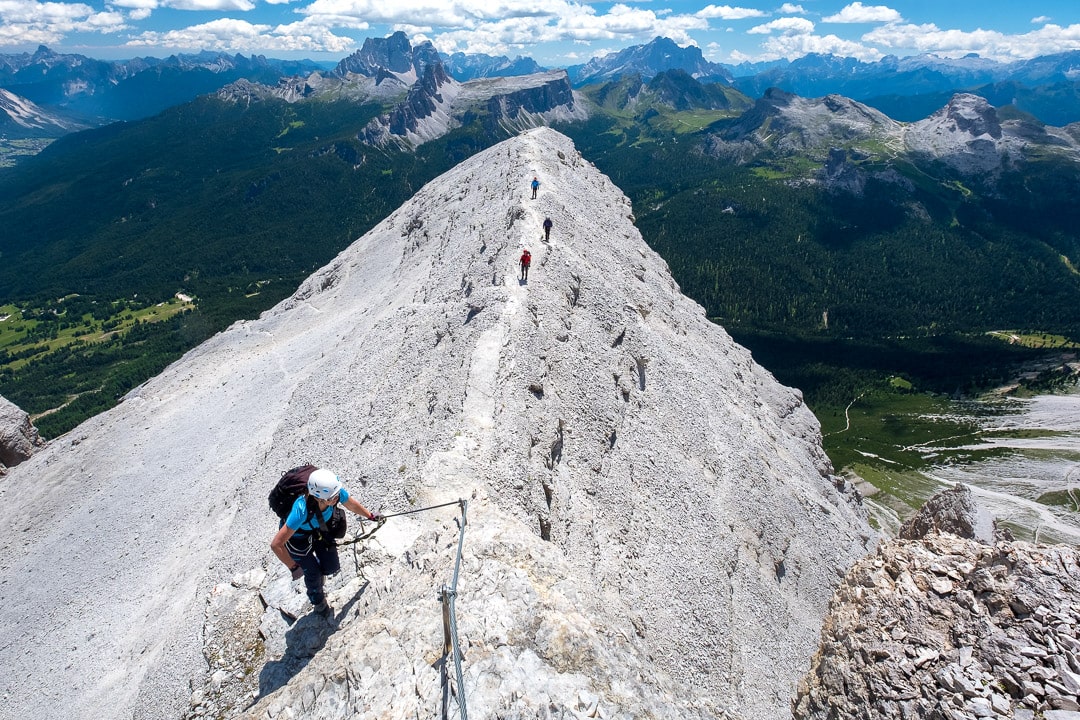
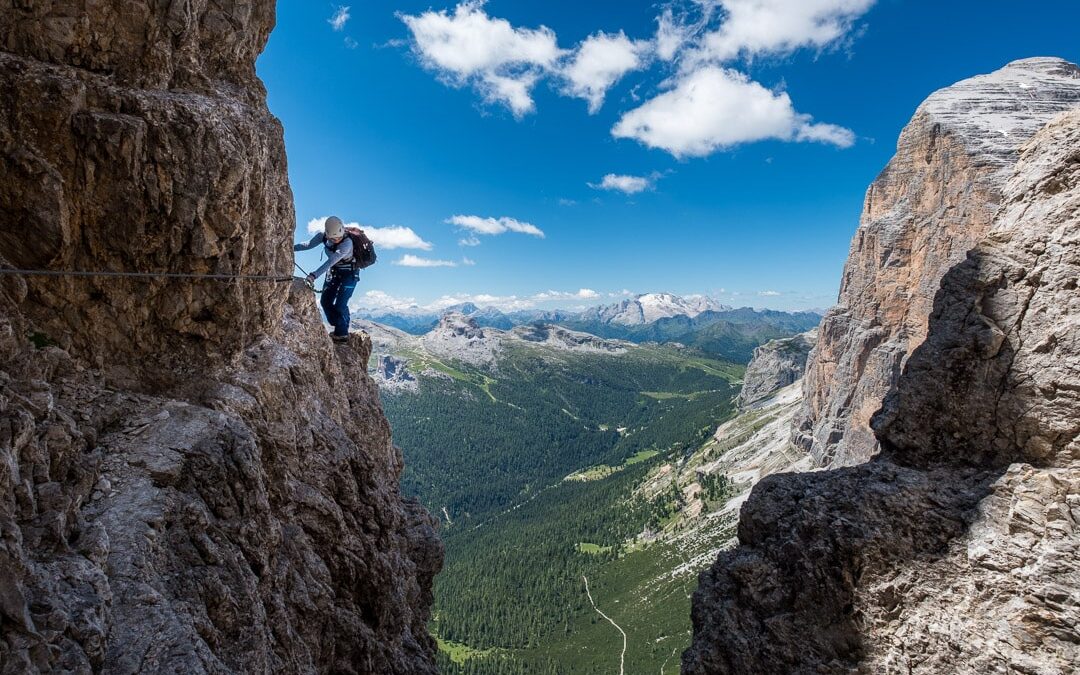
The Dolomites are a true paradise for via ferrata enthusiasts, offering not only spectacular views but also routes with varying difficulty levels that will satisfy both beginners and experienced climbers. However, it’s important to remember that each ferrata requires proper preparation and equipment for via ferrata to ensure safety and comfort during the climb. Learn about the gear you need, the different difficulty levels of the ferratas, and discover practical tips on choosing routes suited to your skill level.
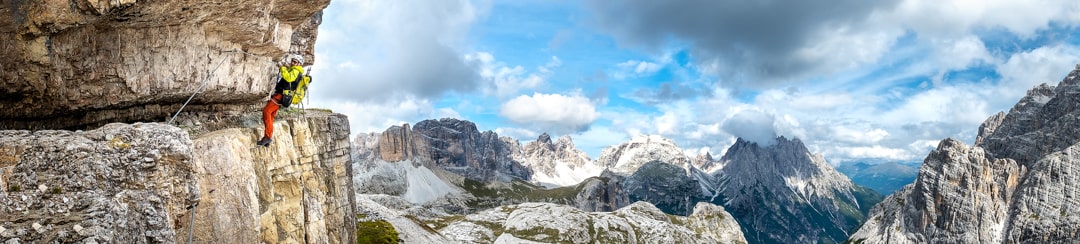
DIFFICULTY of via ferrata
In our guidebooks, we use what is probably the most widespread scale, sometimes referred to as the Austrian scale, based on a five-level division from A to E with intermediate grades (e.g., A/B).
Unfortunately, there is no single universally accepted via ferrata difficulty scale. In fact, each guidebook in Italy presents different scales and definitions of this term. We use what is probably the most widespread one, sometimes referred to as the Austrian scale, based on a five-level division from A to E with intermediate grades (e.g., A/B). The descriptions of the levels in this scale are based on those found in other guidebooks listed in the bibliography.
Note! The difficulty level indicated in the via ferrata description refers to the greatest obstacle, the difficulty level of the most demanding section on the route.
Below we provide a detailed explanation of the VIA FERRATA DIFFICULTY SCALE and an additional piece of information that we provide for some routes – ROCK CLIMBING DIFFICULTY.
Keep in mind that each of us may perceive a given difficulty level slightly differently depending on experience, familiarity, physical or mental fatigue.
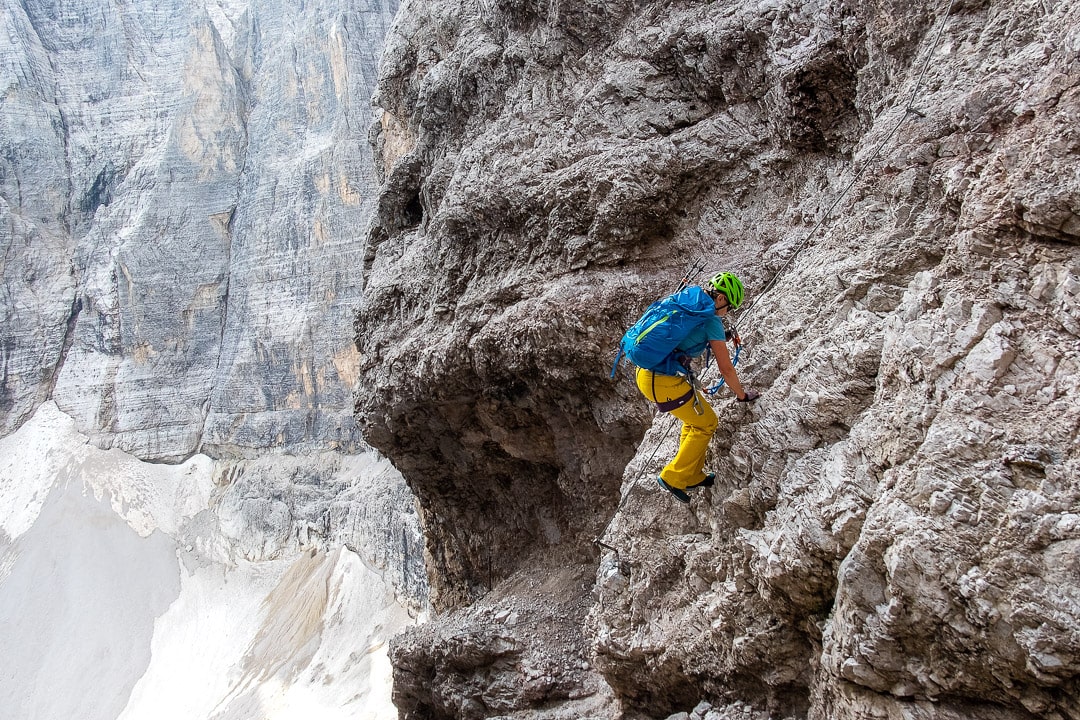
VIA FERRATA DIFFICULTY SCALE
This is an assessment of the highest level of climbing difficulty on the described via ferrata. Possible options on the via ferrata difficulty scale are: A, A/B, B, B/C, C, C/D, D, D/E, E.
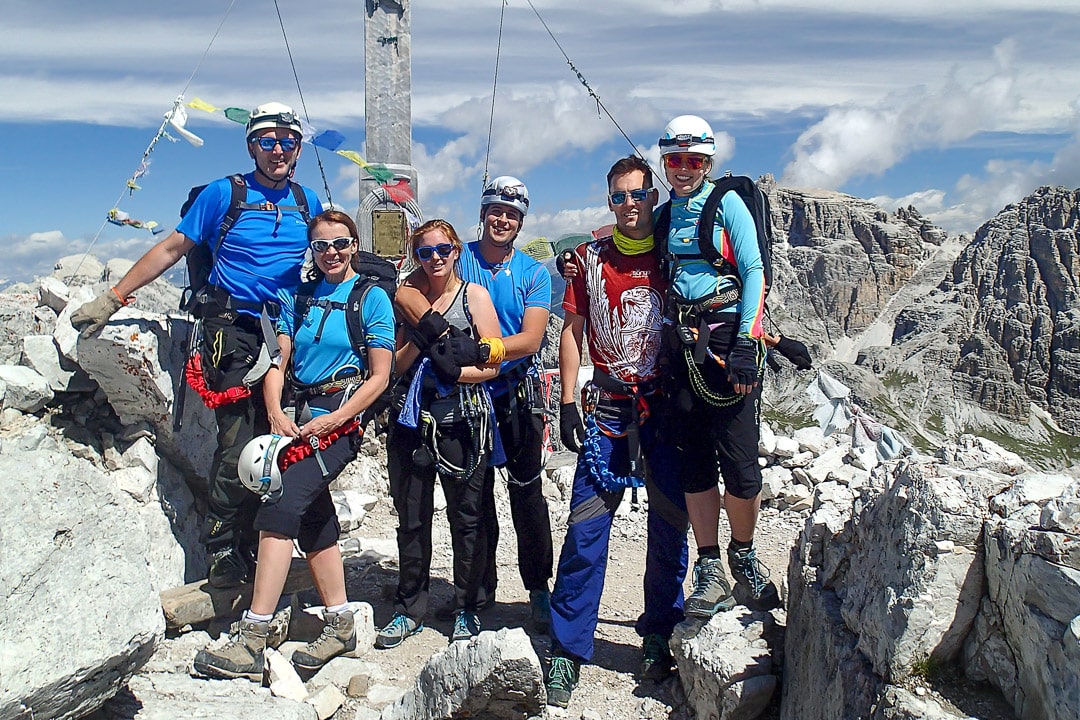
A – easy
The path leads through terrain that can be tackled without major difficulty even without protection, with safety gear installed in more exposed areas, sometimes with short ladders. Many footholds and handholds along the route. Only inexperienced individuals need via ferrata harnesses. Ideal for beginners and youth.
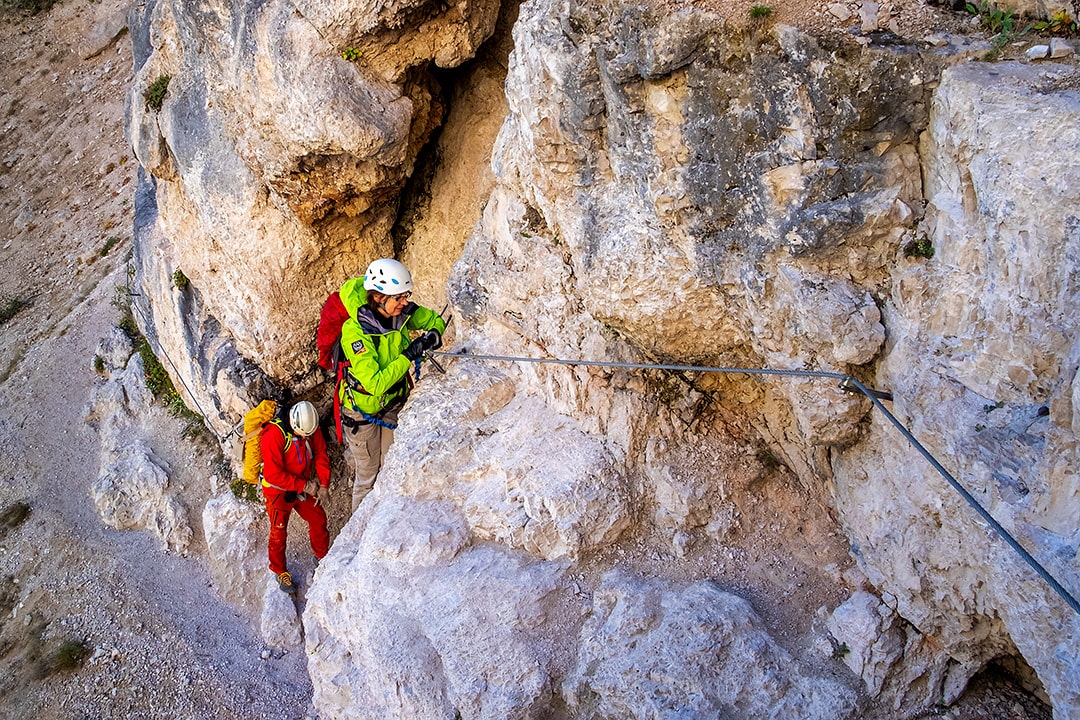
B – moderate
Climbing on a somewhat steeper slope, with rock steps and protection using a steel cable, metal rungs, and rods facilitating ascent, as well as exposed bridges. Longer vertical sections secured with ladders or ropes. Some sections may require greater strength. A via ferrata harness is recommended for everyone despite still moderate technical difficulty.
C – difficult
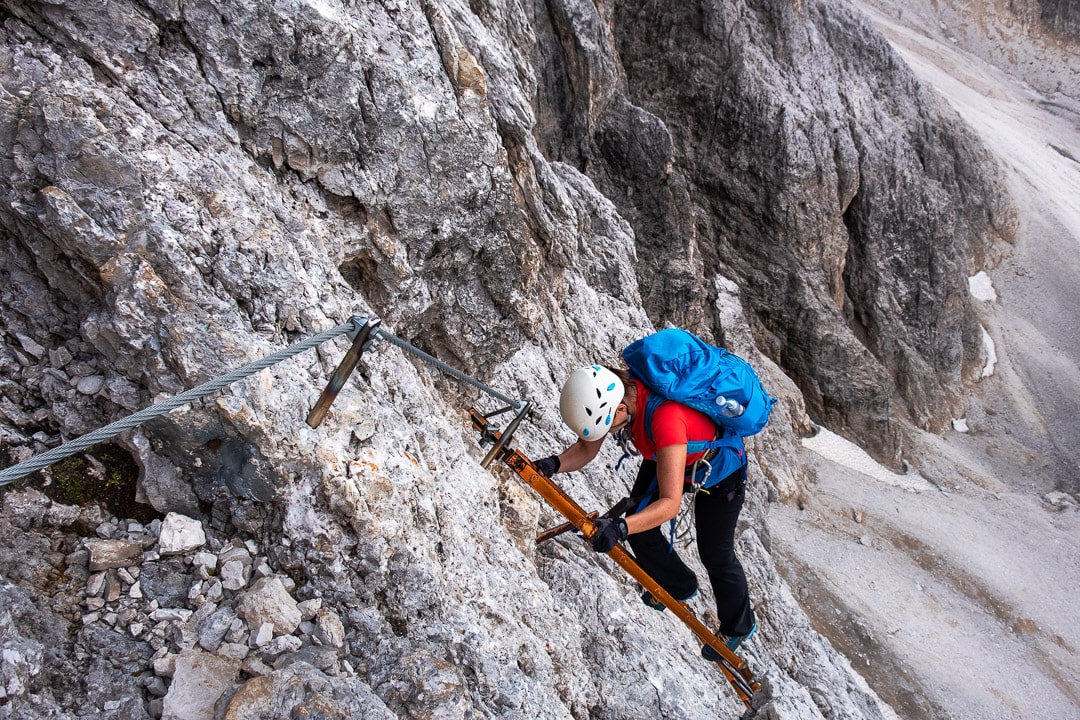
Climbing on vertical walls in some places, even with small overhangs. Few artificial aids in the form of metal rungs and rods, placed only where absolutely necessary. Vertical or slightly overhanging ladders and exposed bridges. Some areas require significant strength. Long routes of this difficulty level are a serious challenge. A via ferrata harness is mandatory for all. This route is definitely too difficult for children and beginners, and only conditionally suitable for well-prepared youth.
D – very difficult
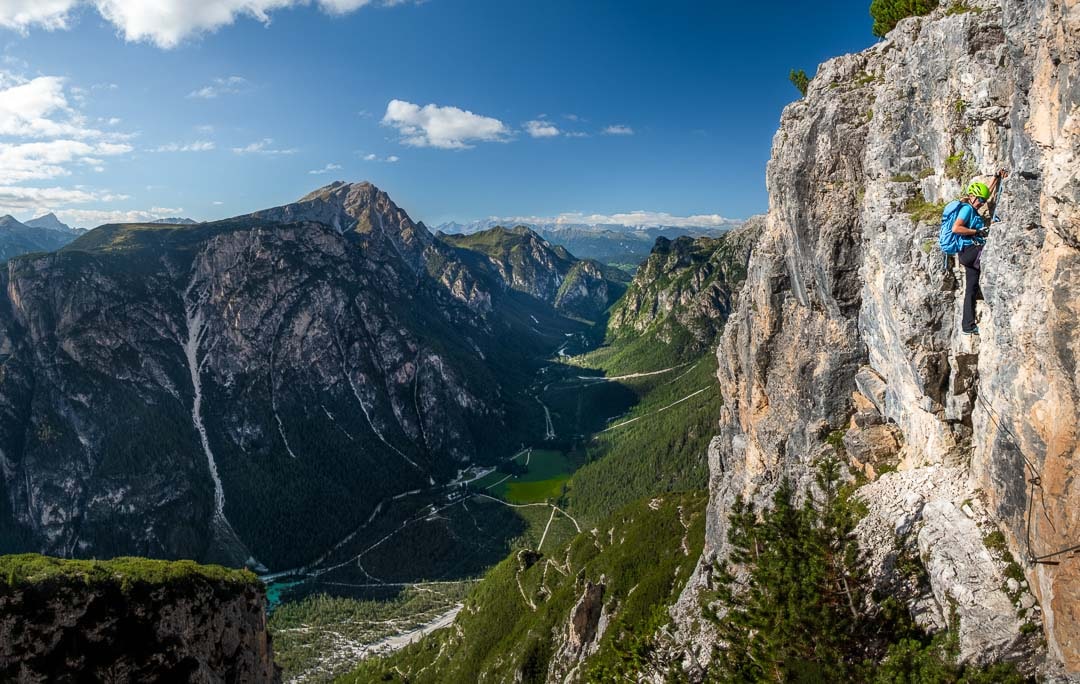
Long sections of vertical climbing with no places to rest. Often overhanging terrain. Frequently secured only with a steel cable without metal rungs and rods. Considerable arm strength and climbing skills are required. Sometimes an uncomfortable and exhausting position when clipping carabiners. Few handholds, and relying on friction between the shoes and rock is often necessary. Sometimes an additional safety sling may be needed. Absolutely not for children or beginners.
E – extremely difficult
DIFFICULTY of rock climbing (UIAA scale)
In difficulty tables of some via ferratas, a number may appear next to the via ferrata climbing difficulty rating, indicating the level of rock climbing difficulty on sections without via ferrata protection. For clarity, this is given in tables using Arabic numerals. The designation may look like this: C/D 2.
I – slightly difficult, basic climbing, it may be necessary to use both hands, but mainly to maintain balance; beginners should be secured with a rope (denoted as 1 in the table).
II – classic climbing, use of both hands is necessary, difficulty comparable to climbing a ladder, everyone should use additional protection (denoted as 2 in the table).
III – demanding climbing on vertical and exposed walls. Additional protection and setting up belay stations are necessary (denoted as 3 in the table).
It is also worth knowing that in the Dolomites, an additional letter-based scale of route difficulty may be encountered, as defined by the CAI – Italian Alpine Club, in the publication “Paths, planning, signs and maintenance.” Routes are marked with letters:
T – excursion-tourist route (sentiero turistico). Runs in the immediate vicinity of villages, tourist resorts, roads, and is particularly recommended for easy leisure walks.
E – hiking trail (sentiero escursionistico), without technical difficulties, which largely corresponds to roads. These are routes leading to mountain huts or connecting valleys. The most common and most frequented type of trail, accounting for 3/4 of the entire marked trail network.
EE – trail for experienced mountain hikers, alpine route (sentiero alpinistico), running through inaccessible areas, with sections requiring mountain knowledge, basic climbing technique, and appropriate gear. Essentially corresponds to a mountain trail at medium altitude, with possible sections equipped with aids (fixed ropes, short ladders) that do not disrupt the continuity of the trail.
EEA – trail for experienced alpinists with gear, “iron” secured (via ferrata o attrezzato), which leads the alpinist onto rock walls, mountain ridges, and ledges, equipped with ropes and ladders for safety, without which the further trip would be genuine demanding climbing using ropes. Such a trail requires appropriate preparation and equipment including a helmet, harness, and via ferrata lanyard. This designation also has a gradation: F – easy and D – difficult.
Via ferratas await you!
If you’re into big views, mountain air and a bit of adrenaline — the Dolomites are made for via ferrata adventures.
These trails combine hiking and climbing, leading you through some of the most spectacular corners of the Alps. It’s a great way to explore the mountains and push your limits — even if you’re not a climber.